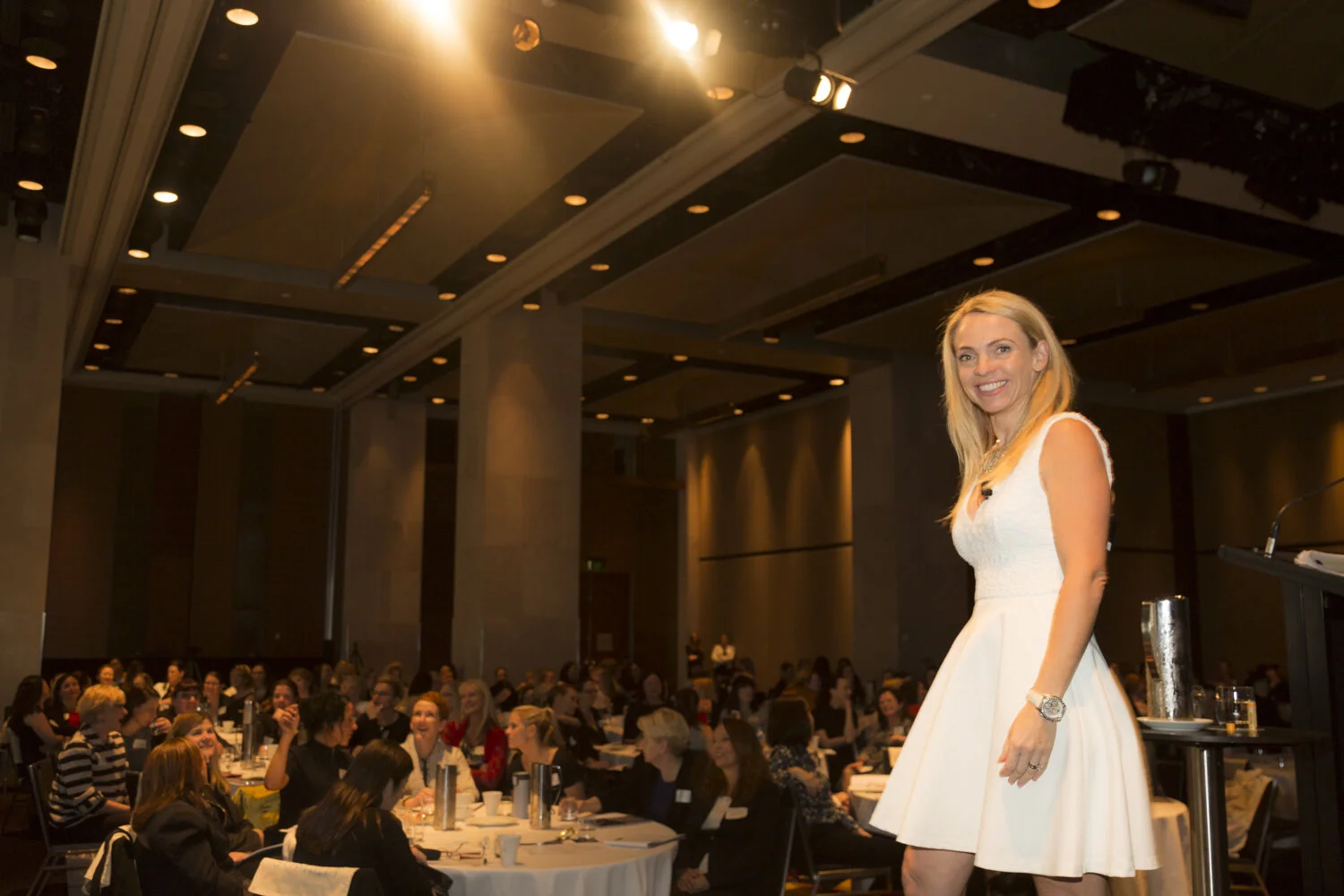
Work is changing damn quickly. Humans? Not quite so fast.
I help leaders and organisations navigate the human side of work; building the trust, behaviours, conversations and capability people need to stay connected and perform through change.
Human Behaviour | Leadership | Culture | Change
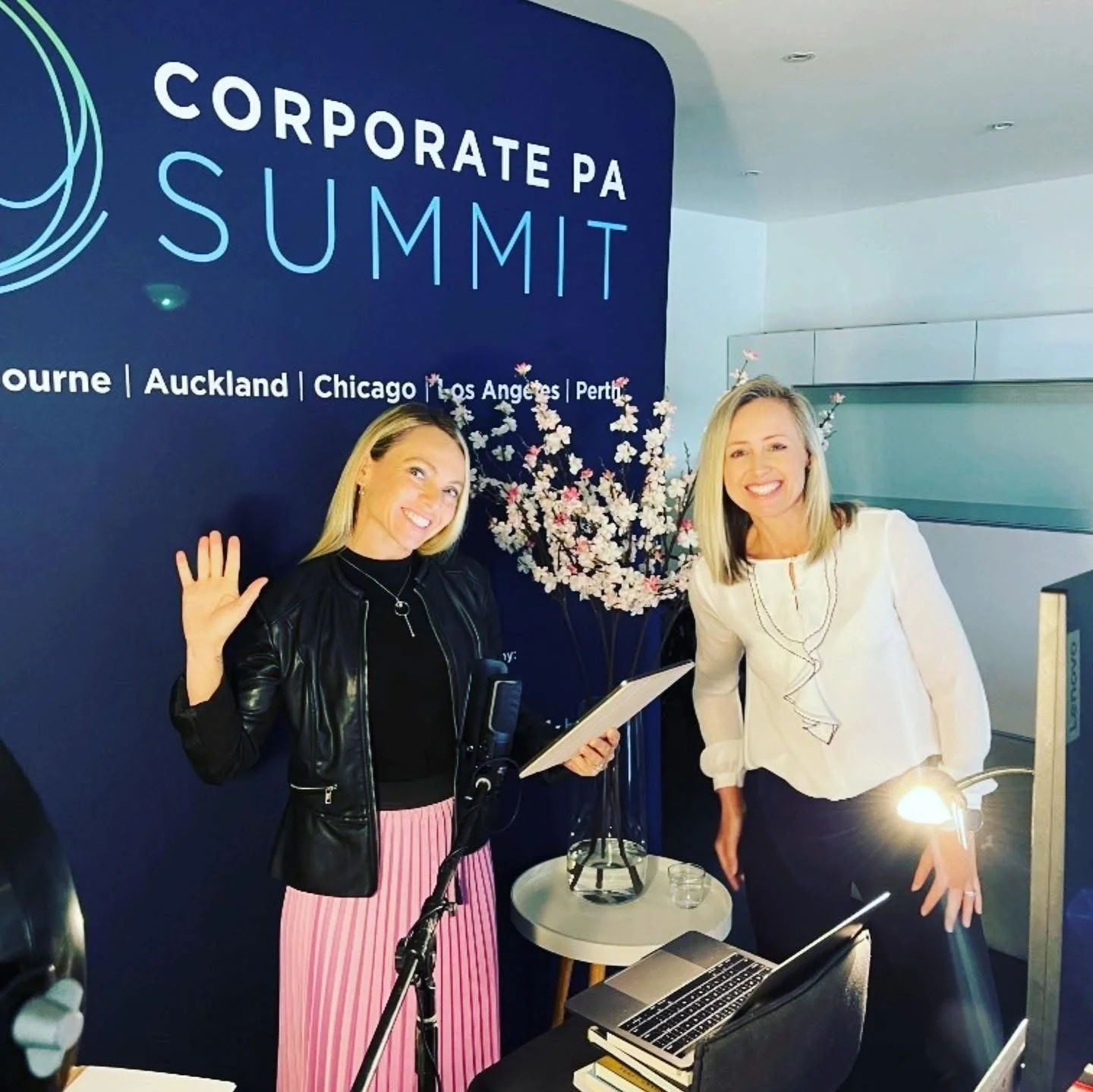
Hi, I'm Blythe.
Human behaviour nerd. Facilitator. Speaker. Business owner. Mum.
I have a confession to make… I am fascinated by humans.
For 27+ years, I've been trying to understand what makes people connect, trust, speak up, adapt and do their best work.
I've worked on both sides of the fence, 13 years in senior HR and Organisational Development roles with organisations including McDonald's Australia and Bunnings Group, followed by 14+ years running Human Incite and working with more than 17,000 leaders and employees.
I'm a facilitator, speaker, leadership and culture specialist, author and, probably most accurately, a bit of a human behaviour nerd.
I take neuroscience and behavioural science, strip away the complicated stuff, add real stories and practical tools, and help people understand what's actually going on with the humans at work and what to do about it.
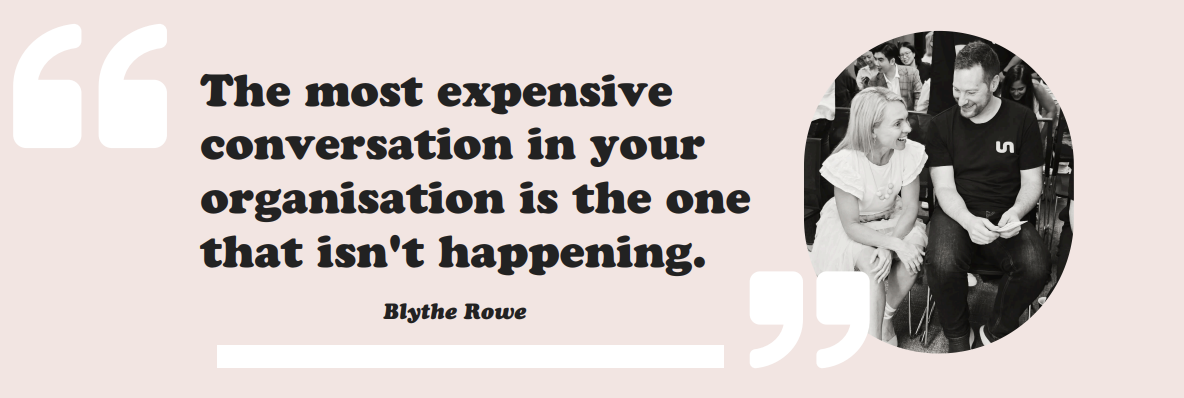
The workplace keeps changing.
Human behaviour hasn't had the same software update.
New technology. AI. Restructures. New ways of working. Increasing pressure.
Changing expectations.
We're asking people to adapt faster, lead through more uncertainty, have harder conversations and somehow keep their teams connected and performing while they're at it.
Easy, right?
Here's what I have learned.
Most workplace challenges are human challenges.
People don't resist change simply because they're difficult.
Leaders don't avoid conversations because they don't care.
Teams don't lose trust overnight.
And telling people to communicate better, embrace change or just speak up isn't particularly useful if they haven't developed the capability actually to do it.
That's the space I work in.
I help people understand what's happening underneath the behaviour and give them practical tools to do something about it, for themselves or the teams they lead.
A bit of neuroscience. A lot of human behaviour. Real stories. Straight talk. High energy.
Practical tools people can implement immediately.

17,000+ | 25+yrs
Leaders and employees who have taken part in Blythe’s masterclass or keynotes across Australia.
25+ years of experience working in or alongside organisations.

Clients
A range of high pressure environments and industries including Government, NT Police, Fire & Emergency Services, Corporates and more

Difference
No fluff
Real tools
Real change
WHAT I HELP ORGANISATIONS DO
Different challenges. Same human stuff.
-
Behaviour + Culture
Respect isn't a policy.
Culture isn't your values poster.
It's what happens between people every single day — particularly when nobody important is watching.
I help organisations align the behaviours that build trust, psychological safety, respect and belonging — and address the behaviours that quietly destroy them.
This includes my signature Respectful Workplace: It Starts With You program, delivered to thousands of employees and leaders across Australia.
-
Confidence + Capability
I have a fairly simple belief:
More conversations. More often.
Not just the difficult ones.
Conversations about performance. Expectations. Ideas. Feedback. Recognition. Risk. Change. What's working. What's not.
And yes, the conversation everyone knows needs to happen but has been avoiding for six months.
Because silence is never neutral.
I build the capability and confidence for people to speak up, ask better questions, give feedback and have conversations that strengthen rather than destroy trust, leading to safer, more high-performing teams.
-
Leadership + Teams + Change
Change has always been part of work.
What's different now is the pace.
Leaders are being asked to navigate restructures, transformation, new expectations, new technology and AI, often while quietly wondering whether they completely understand what's happening themselves.
Meanwhile, their teams are looking to them for answers.
No pressure.
I help leaders and teams understand how humans actually respond to uncertainty and change, and build the change fitness, confidence, trust and practical capability to move through it together.
-
Understand humans better = Lead them better.
We spend a lot of time trying to change what people do without understanding why they're doing it in the first place.
That's why my work starts with human behaviour.
When leaders understand what's happening in their own brain, and recognise what may be happening for someone else, something shifts.
There's often that little:
“Ohhhhh. THAT'S why.”
And that's where better choices become possible.
Awareness matters.
But awareness without skill is just good intention.
That’s why I love teaching leaders the fundamental mindset and skillset it takes to be a leader worth following, esp in today’s changing workplace.
-
There is no shortage of people talking about what AI can do.
That's not my lane.
I'm interested in what happens to the humans while it does it.
What happens when someone who's spent 20 years building their expertise suddenly wonders whether that expertise still matters?
Why do some people jump straight in while others quietly resist?
How does a leader confidently lead AI adoption when they're still figuring it out themselves?
How do we use AI to think better without outsourcing our judgement?
And how do organisations embrace the opportunity without eroding trust, connection or confidence along the way?
I'm not a tech expert or a systems expert.
My expertise is human behaviour, neuroscience, leadership and change.
And as AI changes the way we work, I believe understanding the human on the other side of the technology is going to matter more, not less.
This is the next evolution of my work: helping people and organisations build the human capability to adapt and thrive in an AI-enabled workplace.
WHY THIS MATTERS
Most organisations are waiting for something to go wrong.
Serious mental health claims in Australian workplaces have increased by 160% in a decade. The top psychosocial hazards, bullying, poor support, poor workplace relationships, are all conversation problems. They happen when things aren't raised early. When someone sees something and says nothing. When a manager sits on a difficult conversation hoping it will resolve itself. When a team member is scared of what AI means to their career but too scared to ask for help.
The cost of silence isn't abstract. It shows up in your claims data, your engagement scores, your turnover numbers.
And now, every Australian jurisdiction requires organisations to proactively manage psychosocial risks, not just respond to complaints. The question is no longer whether to address this. It's whether you've built the capability to change it. AI adoption is no longer whether we do or don’t adopt it, it’s whether you are prepared to support the human inside the implementation to do it well.
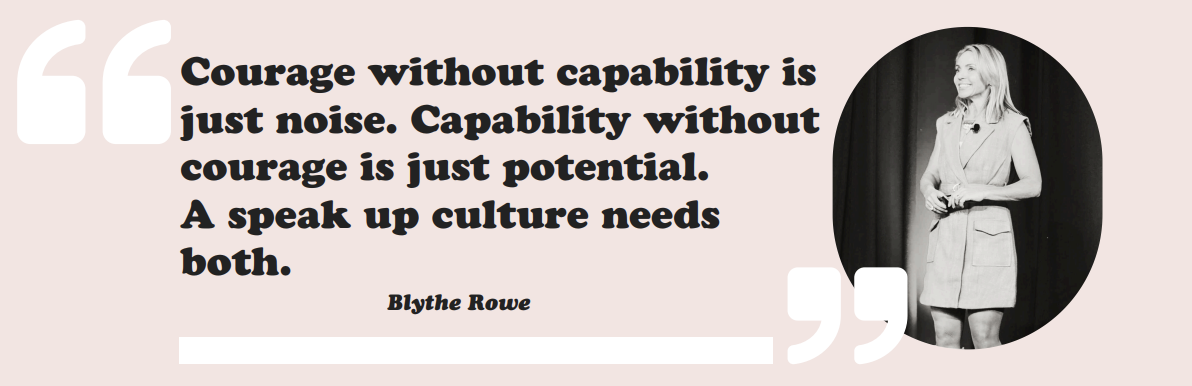
HOW I WORK
My work can be tailored to the challenge, audience and outcome.
🎤 KEYNOTES + MASTERCLASSES
High-energy, story-driven sessions that get people thinking, talking and, importantly, doing something differently.
🧠 PROGRAMS + CAPABILITY BUILDING
Face-to-face, virtual and blended programs designed to build capability over time rather than create one enthusiastic afternoon.
👥 LEADERSHIP + TEAM DEVELOPMENT
Emerging leaders, established leaders and teams who need practical tools to build trust, communicate, adapt and perform.
💬 FACILITATION + STRATEGY DAYS
Need someone independent to get the right conversations happening, challenge thinking and keep a room moving toward an outcome (and keep them energised and engaged in the process)?
Yep. I do that too.
🤝 MENTORING
Practical, human support for leaders navigating the messy stuff that doesn't fit neatly into the leadership textbook.
Got a human problem at work?
A team navigating significant change?
Leaders who need more confidence and capability?
Conversations that aren't happening?
Behaviours that need to shift?
Or perhaps you're beginning to work out what AI adoption means for the humans in your organisation?
Let's have a conversation.
No 47-page diagnostic required.